
Why Brand Collaborations Are One of the Smartest Moves in Food and Drink.
Brand collaborations aren't new, but some of the most interesting strategic thinking in food and drink happens through them, and I don't just mean the ones generating a TikTok buzz.
I am really excited by four collaborations happening right now and what strikes me is how clearly each one is solving a specific commercial problem that might be hard to achieve through other brand executions.
Before I get into the examples, here are some thoughts on what a brand collaboration could do for you, because if you're considering one, you need to be clear on what you're actually trying to achieve.
What a Brand Collaboration Can Actually Do for You
It can bring in shoppers who would never have found you otherwise.
Penetration (getting into new shopping baskets) is where most brand growth comes from. Not selling more to existing buyers, though that matters too, but reaching people who didn't know you existed or didn't have a reason to try you. A well-chosen partner puts you in front of their audience in a context where that audience is open to trial, engaged and trusting.
It can drive standout in a crowded fixture.
Category dynamics in soft drinks illustrate the problem well - research suggests only around 1 in 4 shoppers actually walk the full soft drinks aisle, and those that do spend approximately 27 seconds at the fixture. Twenty-seven seconds. A limited-edition co-branded product gives a shopper a reason to stop, breaking the habit loop.
It taps into loss aversion.
This is the behavioural science piece. Loss aversion (the principle that people feel the pain of losing something more than the pleasure of gaining it) is one of the most powerful and consistent drivers of purchase behaviour. A limited edition activates it almost automatically. "It won't be here forever" does something to the decision-making brain that "available now" never quite manages.
It can drive value into a commoditised category.
This is about trading shoppers up. Not just getting them to buy you instead of a competitor, but getting them to spend more per basket because you've made the premium feel justified. Named provenance, a recognisable co-brand, a tangible quality signal, these shift the conversation away from price.
All four of these outcomes can compound. A new shopper, stopping at the fixture, buying because they know it won't last, spending more because the quality signal is undeniable - that's a lot of commercial value for the brands involved and for the retail partners who list them.
Four Collabs Worth Looking at Right Now
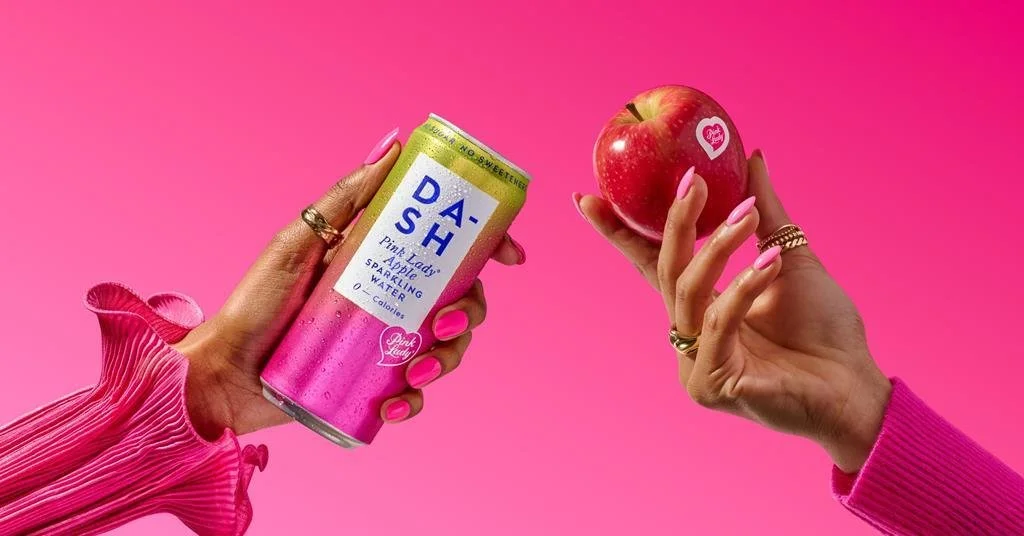
DASH Water x Pink Lady® Apple
DASH has always been clear about what it stands for: real fruit, no sweeteners, no compromise. Pink Lady® has spent decades building brand equity entirely on flavour, it is the apple variety that made British shoppers care about produce provenance in the first place. Both brands champion natural ingredients and that shared value system is what makes this feel earned rather than convenient.
The collaboration also taps into something the category data has been pointing to for a while: consumers gravitating back toward nostalgic, familiar flavours. Tastes they grew up with, now repositioned as the healthier choice. Pink Lady® delivers the nostalgia. DASH delivers the health credentials. Together they cover a lot of consumer ground.
But where this gets really interesting from a category management perspective is the retail placement. DASH x Pink Lady® isn't just going into the soft drinks aisle. It's being placed in the fresh produce section, next to the apples themselves.
That's not just clever merchandising - it's a solution to a structural category problem. The soft drinks aisle has a reach problem. Only around 1 in 4 shoppers walk the soft drinks aisle, spending roughly 27 seconds at the fixture. The fresh produce aisle, by contrast, is one of the highest-footfall areas in the store. Putting a sparkling water next to the fruit it's made from puts DASH in front of a completely different shopper mission driving new penetration into the brand.
Pink Lady® needed a new category moment beyond fresh produce. DASH needed to reach shoppers who were never going to find them in soft drinks.
Free Soul x PerfectTed
This one is built around something different: community overlap.
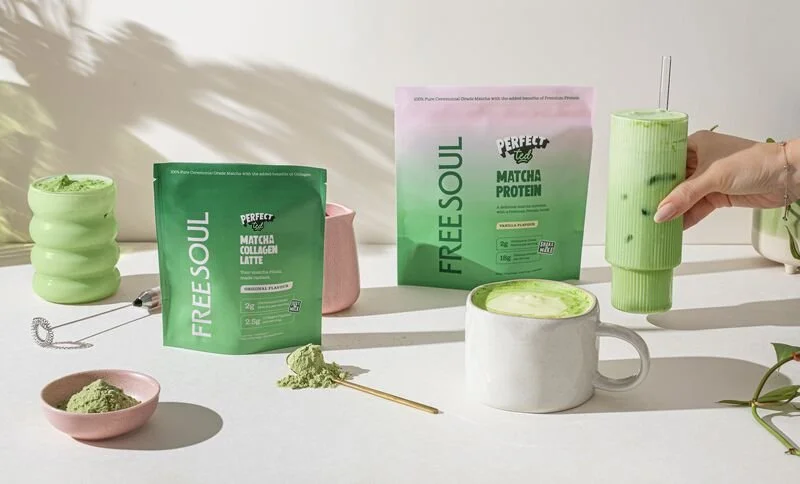
Free Soul is built on a fiercely loyal audience of health-conscious women (I am one of them!). PerfectTed is matcha, and you cannot go anywhere right now without seeing matcha, with an equally engaged community.
On paper they're in different categories. In practice their consumers are the same person: already drinking matcha, already adding protein or collagen into their daily routine, and asking both brands for something that combined them.
The resulting products, Matcha Protein and Matcha Collagen Latte, almost feels inevitable once you see them. And that's the point. The best brand collaborations don't feel like an idea someone had in a meeting room. They should feel natural and collaborative!
For Free Soul, the collaboration extends frequency, it gives their core shopper a reason to engage with the brand in a morning ritual rather than just a workout window. For PerfectTed, it's credibility with a nutrition-engaged audience who might not have thought of matcha as a beyond a flavour that is trending right now. Both brands grow. Both communities get something they were already asking for.
Each brand needed the other's credibility in a space their own consumer was already moving into.
KitKat x Nescafé
First off this looks like corporate convenience, two Nestlé brands doing a Nestlé product and calling it a collaboration. But I think it's smarter than that, and working in biscuits for many years, particularly within Children’s Biscuit Bars (I know Wagon Wheels are round!) gives me a particular view on why.
KitKat has historically sat in the children's biscuit bar segment in category data. It's where the category management logic put it. But the actual consumer? Older, female looking for a lighter chocolatey snack.
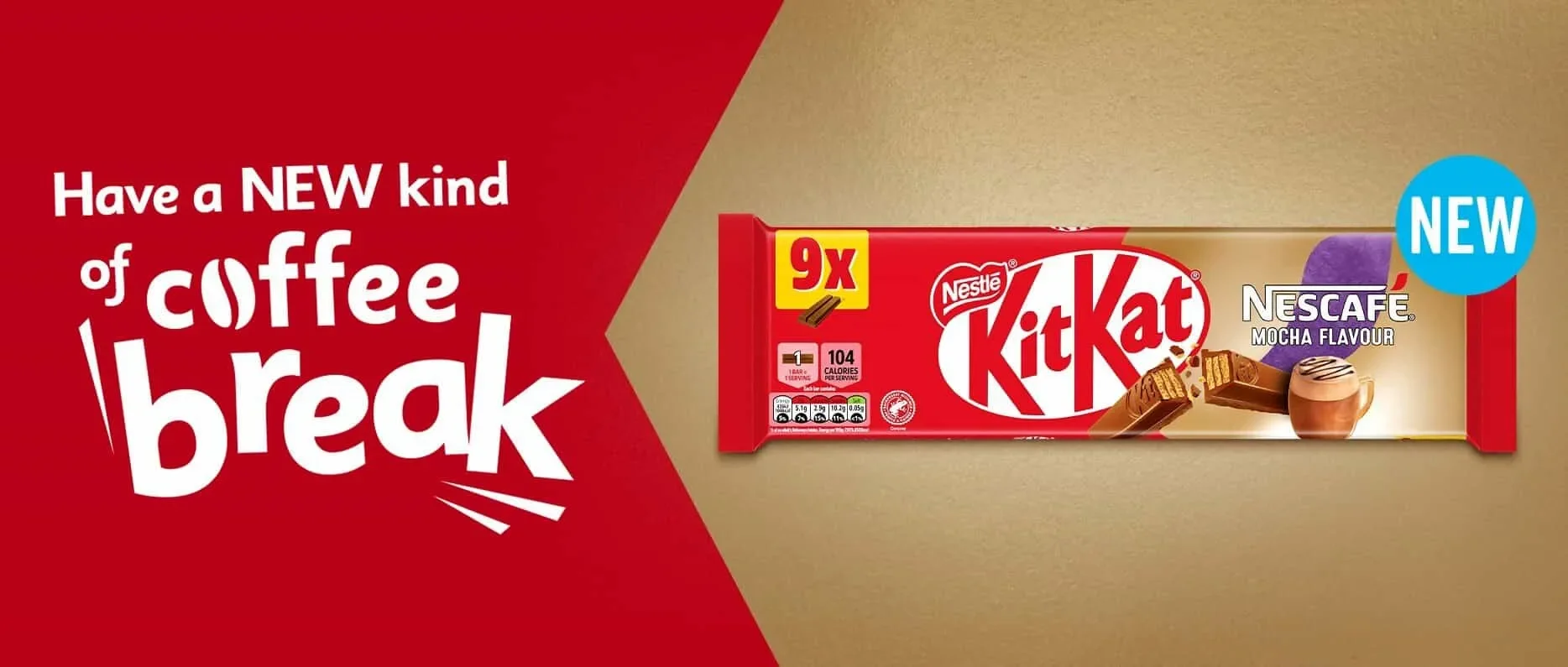
The Nescafé KitKat Mocha and the Nescafé KitKat Latte aren't random flavour variants. They're KitKat explicitly leaning into the occasion and the consumer driving retention rather than penetration.
Biscuit bar shoppers are notoriously promiscuous, brands sit in a consideration set and shoppers rotate between them. Limited edition collabs are one of the most effective tools for breaking that rotation and deepening engagement with one brand over the others. Keeping your shopper is just as commercially important as finding a new one.
KitKat needed to recognise that childlike flavours weren't going to retain its real consumer and to evolve the brand accordingly without losing its core.
M&S x Isle of Wight Tomatoes
I know I am really biased here, I will always be an Island girl at heart, but this one stands out from a category value perspective.
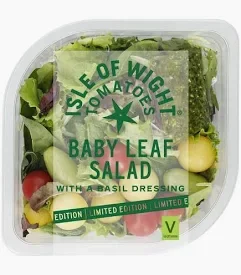
M&S has worked with Wight Salads as a supplier for twenty years, but the formalised co-branded partnership is a different thing entirely. Isle of Wight Tomatoes is now front of pack, not a supplier footnote, not a small provenance credential tucked somewhere on pack. It is a named brand that shoppers are beginning to seek out.
And yes while it is driving brand awareness for Isle of Wight Tomatoes, it also drives average spend for a typically commoditised category and therefore a win for M&S. Why pay more for a salad? Because it is made with Isle of Wight tomatoes. That's a tangible, trustworthy answer that lifts the quality signal off the shelf and makes the premium price feel justified. Named provenance does what "premium" alone can't.
Isle of Wight Tomatoes needed to move from ingredient to consumer brand. M&S needed something that made the premium worth it - a win for consumer, shopper and the category.
So Is a Collaboration Right for Your Brand?
Not every collab is worth pursuing. The ones that don't work tend to share the same flaw: one brand benefits and the other is lending their logo for short-term halo. They launch, generate a social moment, and disappear.
The ones that build lasting equity, for both brands, start with a clear answer to a simple question: what problem are we actually solving?
Are you trying to reach a shopper who would never find you in your current aisle? Increase purchase frequency with someone who already loves you? Drive trade-up in a category stuck on price? Keep hold of shoppers who are rotating between you and everyone else?
The answer shapes everything - who the right partner is, where the product should live in store, how it's priced, and whether a limited edition or a permanent range addition is the right move.
A collaboration isn't a shortcut. But when the strategic rationale is clear and both brands are getting something real out of it, it's one of the most efficient tools available to a challenger brand.
If you're trying to work out whether a collaboration makes sense for your brand, or what kind of collaboration it should be, that's exactly the kind of question I work through with scaling food and drink brands.